The Greco-Italian War, the triple Occupation (German, Italian, and Bulgarian), the Liberation, the Civil War, and everything that followed are events and realities I only have access to secondhand: through family narratives, Hollywood—and non-Hollywood—films, and rebetiko songs. I haven’t lived through any of it, yet I have heard countless stories tied to that era.
On the occasion of October 28th and the anniversary of “Ohi” (Νο) Day, I put together a list of thoughts, memories, film recommendations, and musical narratives about the WWII era. With a European, American, or purely Greek flavor. A list of heroism, as well as horror; beauty, as well as ugliness; reflection, as well as ideological laziness. A list featuring many people who faced dilemmas both seriously and lightly, a list with elements of today’s everyday life that associatively hark back to those times.
Here we go, then. What is 1940:
- The Darkest Hour with Gary Oldman in an epic transformation into Winston Churchill, featuring his riveting speech in the House of Commons on June 4, 1940, a few months before the declaration of “our own” Greco-Italian War.
We shall fight on the beaches
we shall fight on the landing grounds
we shall fight in the fields and in the streets
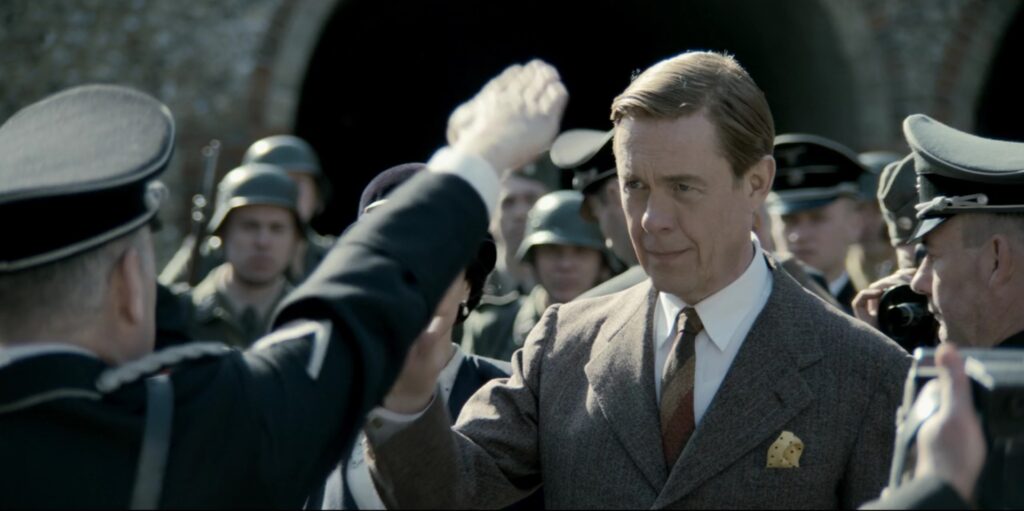
we shall fight in the hills we shall never surrender, he said, and the rest is history. - Season 2, Episode 6 of The Crown about the Marburg Files and the political give-and-take between former King Edward VIII—Elizabeth’s uncle who abdicated the throne—and the Nazi regime. An untold political drama in a remarkably well-crafted series.
- The song “Stelios Kardaras” by the great Piraeus rebetiko musician Michalis Genitsaris, dedicated to Stelios Kardaras—also from Piraeus—the ELAS saltadoros (resistance street-raider) who was brutally tortured and executed by the Security Battalions in August ’44.
Agia Sofia is in mourning / Old and New Kokkinia too
Weep now, whole world / The dogs have caught Stelios
Germanophiles caught him / And Security Battalion men
Our Stelios Kardaras / Those thugs in Rentis, go the lyrics of a song written and performed shortly after Kardaras’s execution. - The zeibekiko song “Aris Velouchiotis“, dedicated to the chief commander of ELAS (Greek People’s Liberation Army).
- The bibliography of Georges Sari and Alki Zei on the Occupation, the Civil War, the Greek political refugees who fled to Tashkent, and the clash there between hardline Zachariadis supporters and advocates of de-Stalinization. When the Sun…, Red Thread Tied, The Winners, Petros’ War, Achilles’ Fiancée. The entirety of modern Greek political history regarding the Resistance and the years that followed is right there. Along with some deeply moving literary depictions of how the lives of the people who lived through the war were altered.
- The Russian-produced documentary Nisgibaemy Nikos (Unyielding Nikos, 2025), which sketches the life and end of the historic leader of the Greek communist movement, Nikos Zachariadis. If one overlooks the fact that the director, Andrey Nikishin, does not even maintain a pretense of objectivity, clearly favoring Zachariadis, the documentary includes interesting information and valuable testimonies about the life of the deposed communist leader, such as that of his son Sifis (short for Iosif, as in Joseph Stalin). It is worth noting that the documents of Zachariadis’s political file in Greece are expected to be declassified in 2029.
- The fact that Nikos Zachariadis’s name is not associated with the National Resistance to the extent it deserves. The “Open Letter to the People of Greece“, which endorses the communist Zachariadis’s support for Prime Minister and his sworn enemy Ioannis Metaxas, is an event of immense political value.
- The discomfort often caused to all of us by the fact that the “Ohi” (“No”) came from the mouth of the dictator Metaxas.
- The kitchen of my home in Patisia, with its window looking out onto the old interior staircase.
- A radio device.
- Brewing Greek coffee in a briki at dawn, in some home—any home—in Athens.
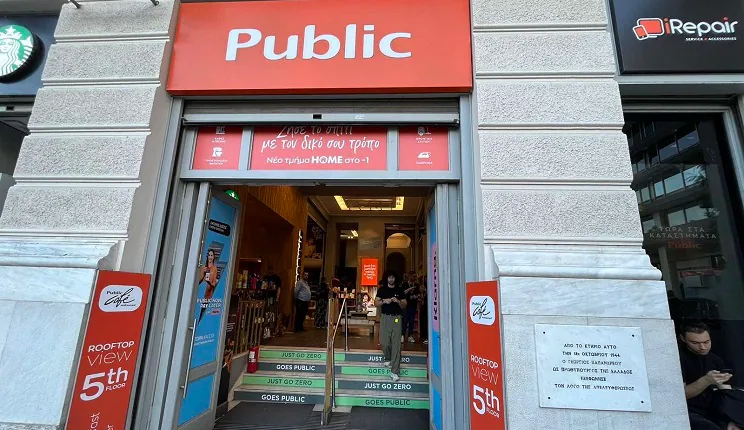
- The Pallis Mansion, on the corner of Karageorgi Servias and Syntagma Square, which I have entered countless times since it houses the Public department store. From the balcony of this building, prime minister Georgios Papandreou, on October 17 or 18, 1944, delivered the Liberation speech.
“People of Athens: Today we celebrate the Resurrection,” he said, inaugurating a brief period of brotherhood, shortly before the chaos of the Greek Civil War dominated once again.
- “The Unexpected Style of Aris Velouchiotis (1905–1945)” is a different kind of article about the guerrilla chief by journalist Panagiotis Koustas, published a few years ago on andro.gr. Free of absolutes or idealization, it centers on Velouchiotis’s political life and is interspersed with details about his personal style—an aspect of Velouchiotis that is rarely highlighted.
- The romance of Melina Mercouri (1920–1994)—the iconic Greek actress, anti-junta activist, and longtime Minister of Culture—who, contrary to what one might expect, was not involved with an EAM resistance member or an ELAS guerrilla captain during the Axis Occupation, but with the black marketeer and collaborator Phidias Giadikiaroglou. To her credit, later in life she never hid her past; on the contrary, she spoke openly about it.
- The Germans Are Coming Again (Oi Germanoi xanarchontai) and Casablanca, two films—one Greek and the other American—that are not only set during wartime, but were actually shot in the midst of war. The first, released in 1947 and filmed during the Greek Civil War, takes place in an Athenian courtyard where right-wingers and left-wingers live side by side. The second, from 1942, portrays an unfulfilled romance that takes a back seat to patriotic duty.
- My friend Maria, who in the eleventh grade used to tell me about her grandfather, a war hero who took part in the operation to blow up the Gorgopotamos viaduct alongside Napoleon Zervas and EDES. Hearing her stories was a great starting point for me to begin delving into the Greek Resistance, which was anything but one-dimensional in terms of ideology. This joint operation with British saboteurs and the communist-led ELAS markεδ one of the largest and most successful acts of sabotage in occupied Europe. Zervas was the founder and military leader of EDES (National Republican Greek League), the second-largest Greek resistance group, which stood as the primary non-communist, republican counterpart to ELAS.

- The shared—and grim—past of two of Greek cinema’s brightest stars. Aliki Vougiouklaki and Zoi Laskari both lost their fathers during the war. Ioannis Vougiouklaki was executed by ELAS forces in 1943, when Aliki was nine years old, because he had served as Prefect of Arcadia during the Axis Occupation. Dimitrios Kourouklis, a Greek Army officer and member of the anti-communist Panhellenic Liberation Organization (PAO), also lost his life in 1943, most likely following a clash with ELAS fighters, while Zoi Laskari was still a baby.
- The personal story of the—by all accounts, widely respected—former Prime Minister and leader of the New Democracy party, Georgios I. Rallis, who as a young lawyer faced the difficult task of defending his father, Ioannis Rallis, the last prime minister of the collaborationist government during the Axis Occupation.
- My grandmother Lilika (Eleftheria) Bornova and my grandfather Takis Charalambakis, a couple with political differences during turbulent times (during the Axis Occupation, my grandmother was a member of the left-wing youth resistance organization EPON, while my grandfather had served on the front lines as a young doctor, was a moderate centrist, and had no ties to the left). They spent a lifetime together and managed to preserve both their individual political identities and their relationship at the same time.
- The film Inside Man by my favorite director, Spike Lee, featuring Christopher Plummer as a wealthy banker with a hidden Nazi past and Clive Owen as an unexpected avenger.
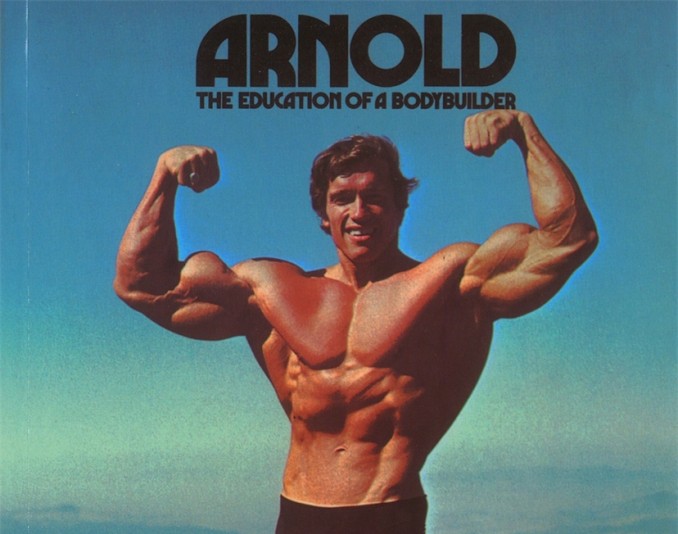
- The personal story of Arnold Schwarzenegger. The man who built a career as a muscular pop icon has a much darker past than his image suggests, having been born in war-ravaged Austria in 1947 to a Nazi father. He has repeatedly denounced both Nazism and neo-Nazism.
- The expression “Occupation syndrome” (katochiko syndromo), which we used constantly growing up (in the ’90s and ’00s)—something I feel no longer applies to those under thirty. Perhaps because the Axis Occupation as a family memory and the “throw-nothing-away” mindset as a habit have lost their hold over time.
- “Oi Ladades” (“The Olive Oil Profiteers”), the zeibekiko song by Michalis Genitsaris written during the Axis Occupation, inspired by a real-life incident—the execution of two black marketeers—that Genitsaris witnessed firsthand.
- The fact that in 1942, after the Albanian front had fallen and the German occupiers had entered Athens, the visionary Greek theater director Karolos Koun (1908–1987) founded the Art Theatre (Theatro Technis), bringing light into the darkness.
- How difficult peacetime is for someone who has lived through war—not only for themselves, but also for their children and even their grandchildren. I have happened to meet descendants of some of the “giants of the ’40s” and watched them live difficult lives. Somehow, it seems that the family narrative highlighted only the “hero’s” heroism rather than his fear, which was silently transmitted to the generations that followed.
- The remarkable Holocaust documentary Shoah, screened several years ago at the Athens International Film Festival (Nychtes Premieras). Its creator, Claude Lanzmann, exposes the quiet antipathy of ordinary citizens—such as certain villagers in Poland—toward Jews, showing that antisemitism was widely accepted and not limited solely to organized Nazis.
- Our visit—just a handful of young Greek journalists in 2014—to the Wannsee Villa in Berlin. That is where the Wannsee Conference took place on January 20, 1942, with Adolf Eichmann and 14 other Nazis organizing the Final Solution for the extermination of the Jewish population.
- The philosopher Hannah Arendt and her courageous approach to the “human type” represented by Eichmann, whom—contrary to every prevailing view of the time—she described as an ordinary bureaucrat, capable of committing the greatest of crimes in the name of obedience to duty. Eichmann in Jerusalem: A Report on the Banality of Evil is a groundbreaking work in the field of political science, although serious objections remain, arguing that Eichmann was merely playing the role of a simple-minded, responsibility-averse civil servant, when in reality he was a highly intelligent criminal.
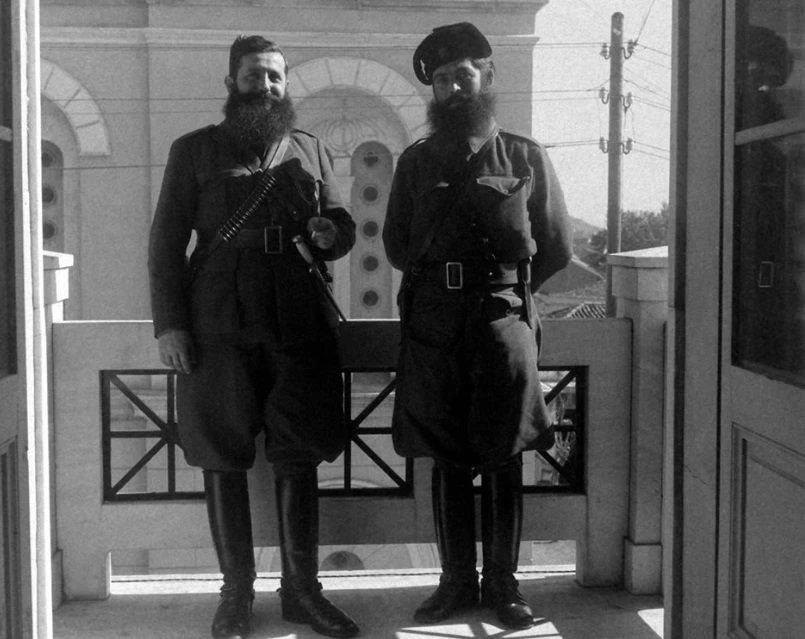
- The EAM-ELAS-DSE Museum at the far edge of the country, in the village of Kallithea in Prespes—because it lies far away and speaks of something distant.
- Judgment at Nuremberg and Labyrinth of Lies, which refer to a series of trials held for the denazification of Germany and the punishment of the Nazis. The first film depicts the trial of German jurists presided over by an American judge, while the second follows West German prosecutors trying to track down the average German Nazi—the baker, the teacher, the ordinary citizen—and bring them to justice in order to achieve a deeper and more meaningful reckoning in the country.
- How little we Athenians—and Southern Greeks in general—know about the Bulgarian occupation, an exceptionally brutal chapter of the war that affected Northern Greece.
- A repulsive memory I have from my years studying at Panteion University: the university was under occupation, and a far-right guy (young, he must have been around 20) had been “arrested” by a group of “anarchists,” who were holding him in one of the rectorate’s offices, “interrogating” him by asking what his grandparents did during the Civil War, and forcing him to go to the bathroom under escort as if he were a prisoner of war. Such fascist and pointless practices both harm the movement and demonstrate a nostalgic fixation on something old and ugly like the Civil War.
- Meeting a wonderful woman from Ioannina a few years ago, who belongs to the few remaining members of the Jewish community of Ioannina. On the occasion of an interview I conducted with her on an unrelated topic, I remember her describing her father with admiration and how he managed to get by after the war. Being both Jewish and left-wing, it was impossible for him to find work in his field as a scientist, because no Greek public service would hire him, so he was forced to do something completely different—at which he nevertheless excelled.
- The PASOK government under Andreas Papandreou, which in 1982 passed the bill recognizing all National Resistance organizations regardless of political affiliation, a move that vindicated the actions of EAM-ELAS-EPON. The bill was supported by the Communist Party of Greece (KKE), Georgios Mavros’s United Democratic Left (EDA), and former Prime Minister Panagiotis Kanellopoulos, whereas it was voted against by Evangelos Averoff’s New Democracy (ND).
- The wartime landmines that we hear on the news every now and then have been “found and neutralized.” They resemble unresolved issues waiting to go off, like a traumatic memory in a therapist’s office that surfaces unexpectedly to remind us of “what happened”.
- The chilling 2023 film The Zone of Interest about the “little house of happiness” right across from the Auschwitz concentration camp and how “normality” can coexist alongside horror.
- The clash between British troops and EAM-ELAS in December 1944, and the role Winston Churchill played in how events unfolded—transforming from a militant anti-fascist into a feudal landlord over Greek lives.
- The weekends I spent as a child at the headquarters in Perissos (the Athens district where the Communist Party of Greece, the KKE, is based), because of my father’s job with the party. I remember various white-haired old men walking into the office, smiling sweetly at my sister and me, and giving us gifts—plastic beach balls and toys. It was the late 1980s, and those men looked to be around 70, so they certainly carried memories and lived experiences of the war. I wonder who they might have been.
- The city of Berlin, which was partitioned after the war and remained divided for nearly half a century.
Read also:
My Berlin
Pros and cons: A musical journey to old Ayvalık
Back to homepage
Leave a Reply