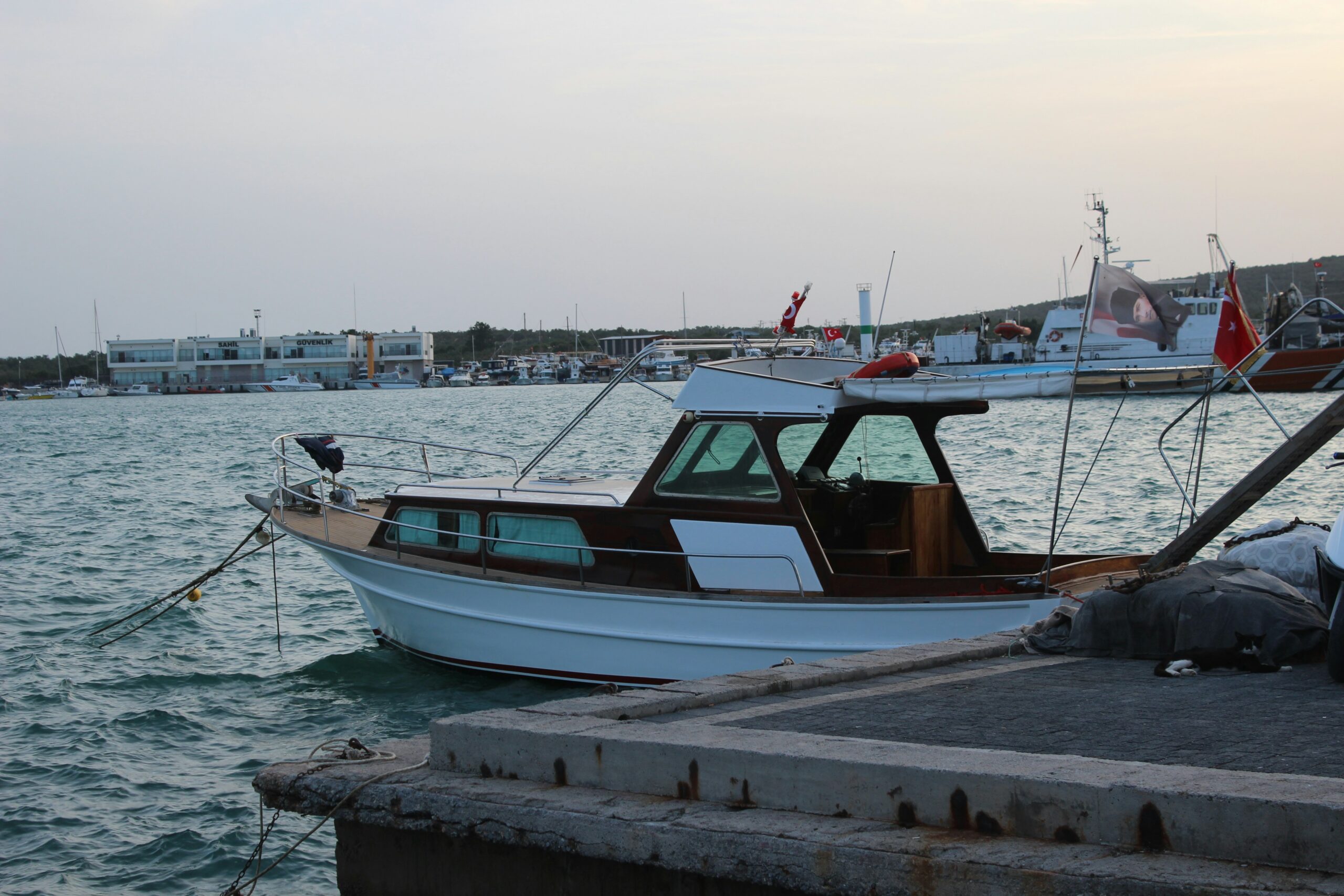
Beautiful Ayvalık.
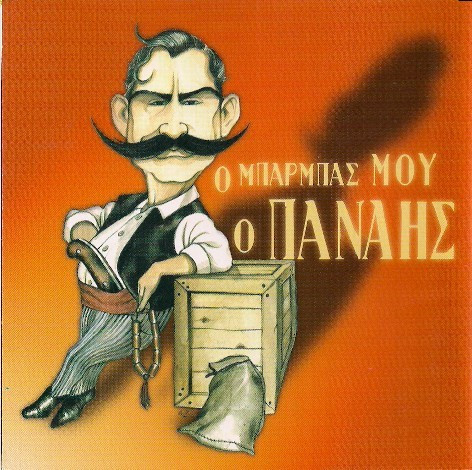

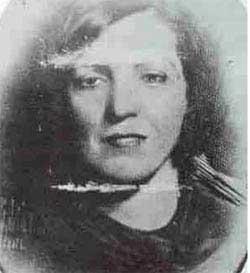

The column drops anchor at a musical destination: the song “O Barbas mou o Panais” with lyrics by Eftychia Papagiannopoulou and performed by Michalis Zambetas, composer, performer, and son of the great Greek musician Giorgos Zambetas.
Since I’m probably in a good mood, I didn’t find a single negative thing about this epic song by the greatest Greek lyricist. We don’t know exactly when she wrote it, but this specific recording was made in 1999 by M. Zambetas. Five “pros” and zero “cons” for this phenomenal song, which you can listen to here while reading along with the lyrics.
Pro 1: Narrativity
Unlike the Greek popular songs of recent decades (which, to me, are a bit one-dimensional, because they focus on the sad clown or the lovers on a tightrope, forgetting all the other damned roles in this circus called “life”), pre-war and post-war popular songs are different. Their lyric structure is multi-layered, the characters are more numerous, and their stories have greater narrativity, much like great literary epics. No, “O Barbas mou o Panais” is not the Odyssey, nor is Eftychia Papagiannopoulou Homer, but in reality, the way they capture their thoughts is not all that different.
Eftychia’s “Panais”—a 12-stanza song with 71 lines—tells the story of a tough man (with a knife tucked tightly at his waist), masculine (with a waxed black moustache), who loved life and women (café aman and romantic affairs). Emotional and giving toward the underprivileged (if he saw someone poor / he would cry like a little child), quite rebellious and outlaw-like (to hide his tobacco crops / he climbed over the mountains / and fled to Constantinople), with zero control over his emotions (and bang, bang went the pistol shots / he stirred up the neighborhoods / and smashed up two brothels). A charming man, yet one you wouldn’t want to get too involved with because, as repeated in the chorus, he had a cloudy, heavy gaze.
Beyond a full portrayal of the man, Eftychia also adds her personal touch to the setting in which the protagonist moves: an Ayvalık imbued with a distinct Greek character, poor neighborhoods and brothels, a matriarchal household with Alisavó and Tzevó who, as we suspect, cover for the central hero in his illegal activities, a life filled with plenty of eroticism and a belief not in logic, but in passions and destiny. Eutychia’s characters cross the road with their eyes blindfolded, relying on instinct and luck for their survival—something she also did in her real life, since she was notoriously addicted to gambling, something she and her family paid a heavy price for.
I love the whole song, but one of the most moving images is the moment when the Turkish authorities, in order to defuse the crisis within the Greek (romaiiki) community, shut down the local brothel.
And at the break of dawn / the Turks issue an order / for the brothel to close / so no other Greek gets killed / from the grief weighing on his heart / and Romiosini (Greekness) is extinguished.
They act, in other words, protectively toward the Greeks of Ayvalık.
Pro 2: The Words
Eftychia was born in 1893 in Aydın, lived in Sparta of Asia Minor, in Antalya, and after the burning of Smyrna (1922), in Athens. Different eras, different language, different words. In this specific song, there were words completely unknown to me.
* asikiliki = bravery
* lazo = knife
* katirmatzis = smuggler
* antamis = the upright, honorable man
* kontrampatzis = smuggler once again
* tsantirmas = gendarme / policeman
* katirmas = contraband / smuggled goods
* fari = steed / horse
* tsakirisμένος = drunk (?)
* nene = grandmother
* kirchanas = brothel
Hello there, Eftychia, literature teacher of popular music!
Pro 3: The Performer
Michalis Zambetas delivers a deeply personal interpretation of an eight-minute-and-thirty-second song, from which only the final stanza is missing—where Eftychia refers to the feminine gender (I grew up, you see / a girl among girls).
As the son of the great Greek bouzouki player, Giorgos Zambetas, Michalis has his father’s characteristic swagger, both in his voice and in the way he sings. He is ideal for the song because, while technically he is the narrator, he essentially evokes the hero himself. He sings about “his uncle Panais,” but we, as listeners, hear Panais in person narrating his own life.
Pro 4: The Orchestration
What truly enhances and highlights the song’s narrativity is its orchestration. The bouzouki, the guitar, the accordion, the double bass, and the percussion seem to accompany every theatrical act, to comment on the protagonists and the action, to grieve or rejoice over what unfolds before them.
Pro 5: The Lyricist
Many popular songs have been written by many great lyricists. Few are like Eftychia’s. Is her gender a coincidence? The fact that she lived a “masculine” life—in the sense of extroversion—while simultaneously having access to everything that constituted the “female” experience: home, family, children, grandchildren?
The truth is, I have no idea. My feeling is that it isn’t. When you live in multiple worlds, such as Eftychia did, you have more pairs of eyes, and if you are talented, you can generously pass on to your listeners the insights you gathered from and about life—just like she did.
Leave a Reply