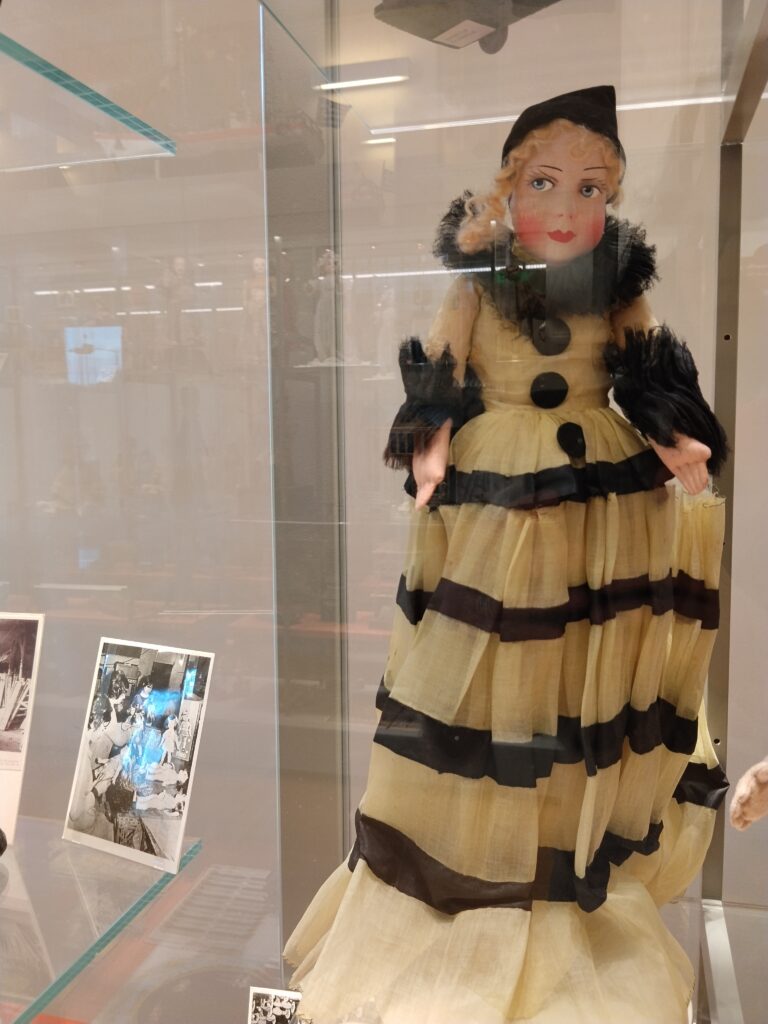
The Benaki Toy Museum is housed in the Kouloura mansion on the Athenian Riviera. It opened in 2017 and its collection includes approximately 20,000 items related to childhood. Dolls, dollhouses, board games, miniature cookware, ships, cars, Karagiozis figures, figures in traditional fustanella kilts, monkeys, and pierrots, originating from Greece as well as Western Europe, the Far East, America, and Africa.
A toy collection, viewed through a non-childish lens, reveals a lot about the society in which each object was born.
There are “beautiful” dolls with a purely decorative character and others designed to guide young girls regarding what beauty means and how to achieve it. There are expensive toys that function as status symbols and toys made from cheap materials that conceal poverty and resourcefulness. There are toys aimed at pinning an individual down to a specific role and sabotage-toys whose mission is to awaken consciousness and boost morale. In short, there are innocent toys and not-so-innocent toys.
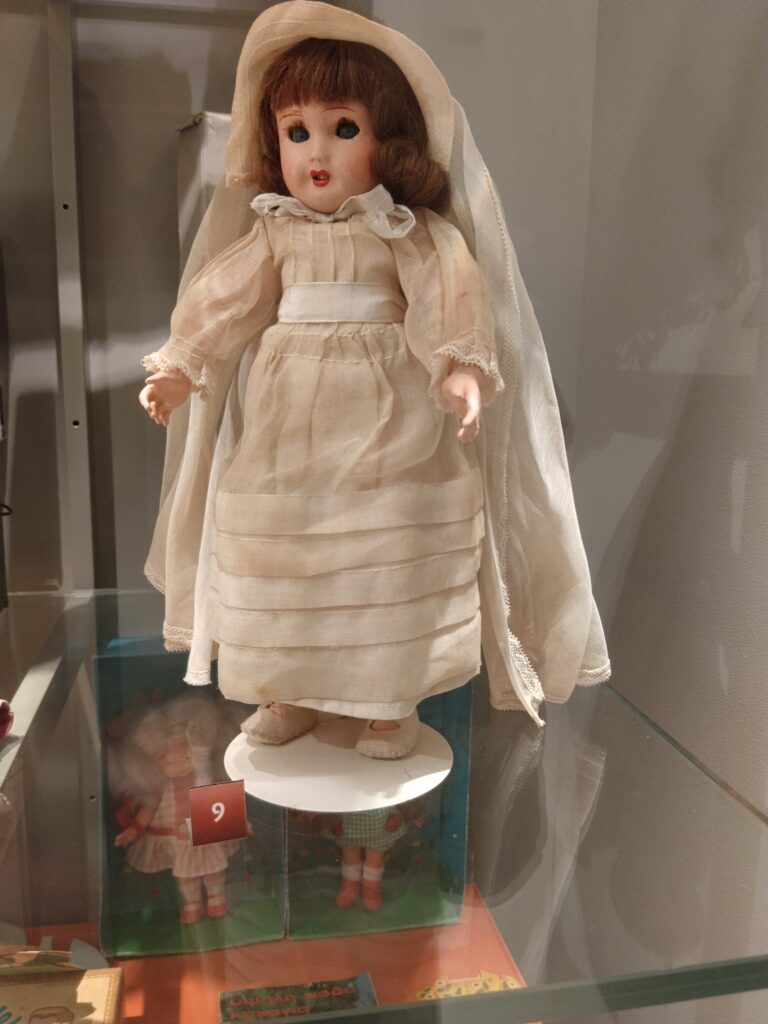
Βleuette Dressed as a Bride
Bleuette is a famous porcelain doll by the company Société française de fabrication de bébés et jouets, released in France from 1905 to 1960 for the readers of the magazine La Semaine de Suzette. Over her 55-year lifespan, she became a pilot, a car driver, a Red Cross nurse, an ice skater, a skier… Created by devout Catholics, she was silently tasked with a guiding role to teach girls how to become proper French wives and mothers. The pictured Bleuette is a modest and elegant interwar bride from 1930.
The Musical Toys of Gustave Vichy
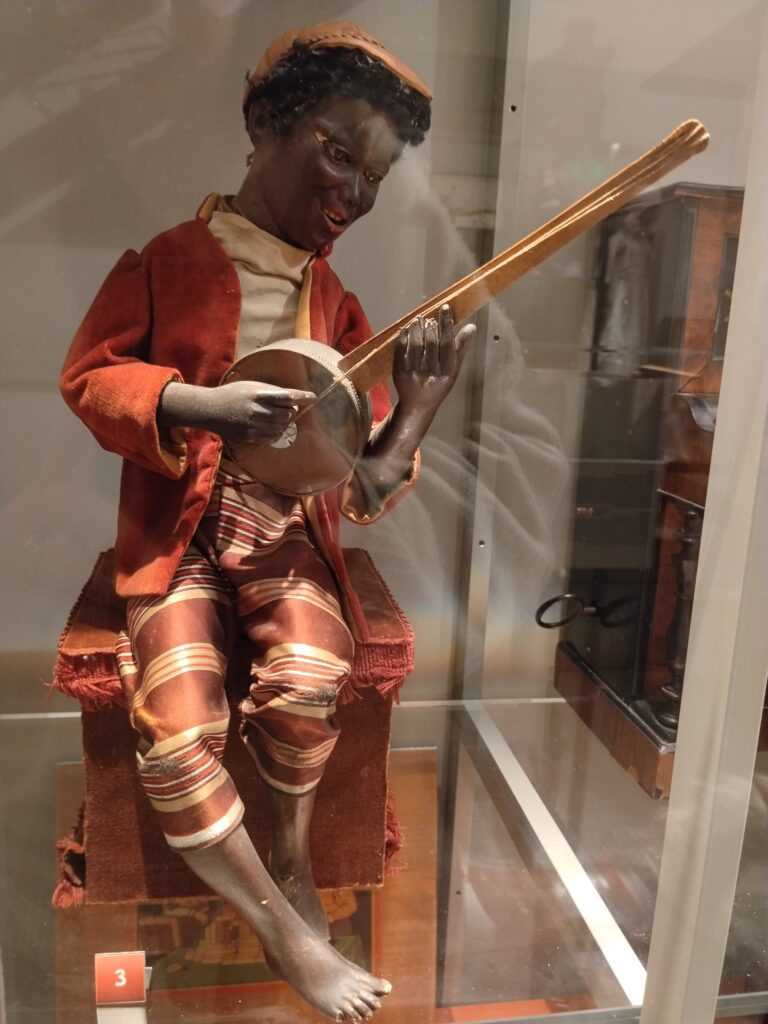
Born in 1839 in Paris, Gustave Vichy took over his father’s bankrupt business at the age of 23. He patented a method for replacing wooden parts with metal ones and focused on mechanical toys with musical mechanisms. His dolls are interesting and varied: a Moorish woman playing a harp, an Ethiopian woman with a lyre, a boy with a banjo (photo). In his African dolls, Vichy often placed a musical instrument in their hands, unlike the white-skinned dolls, which are more static, looking into a mirror or simply posing.
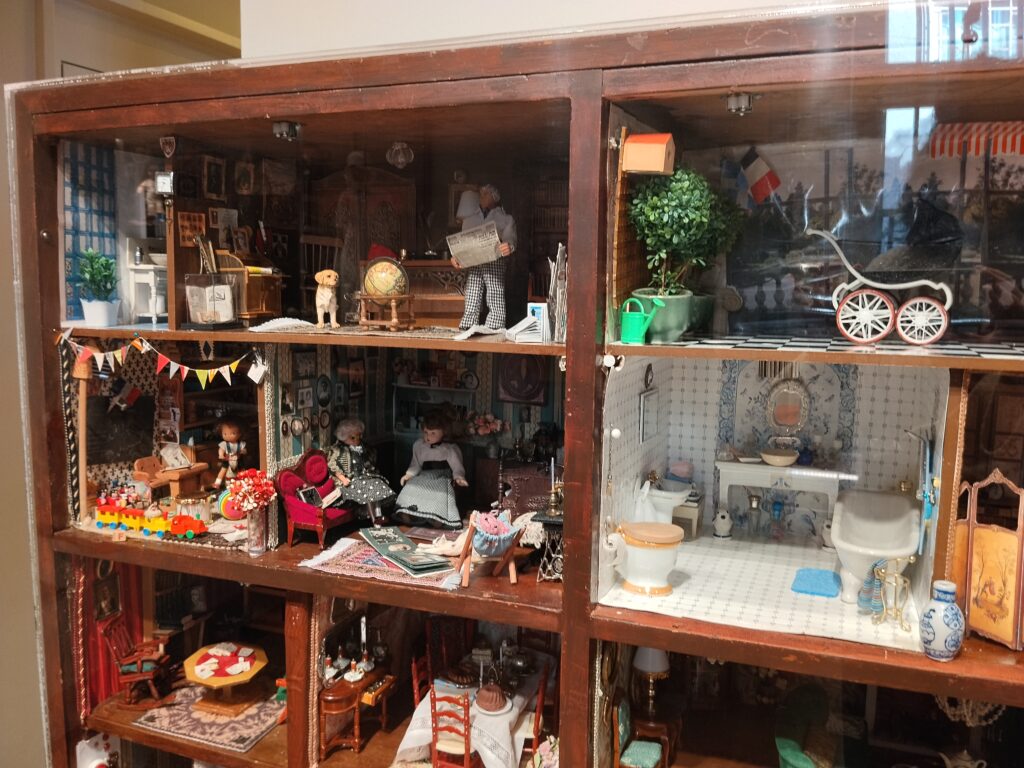
One of the museum’s multi-story dollhouses depicts a 20th-century Greek middle-class household: the grandmother and her granddaughter in the living room, the father (?) reading a newspaper, beside him stands the “guardian of the house” gazing hypnotically at the globe, while 1-2 floors below, on the set dining table, we see an upside-down cake mold. The atmosphere is warm and familial, with gender roles defined and predictable.
Christmas in Chios
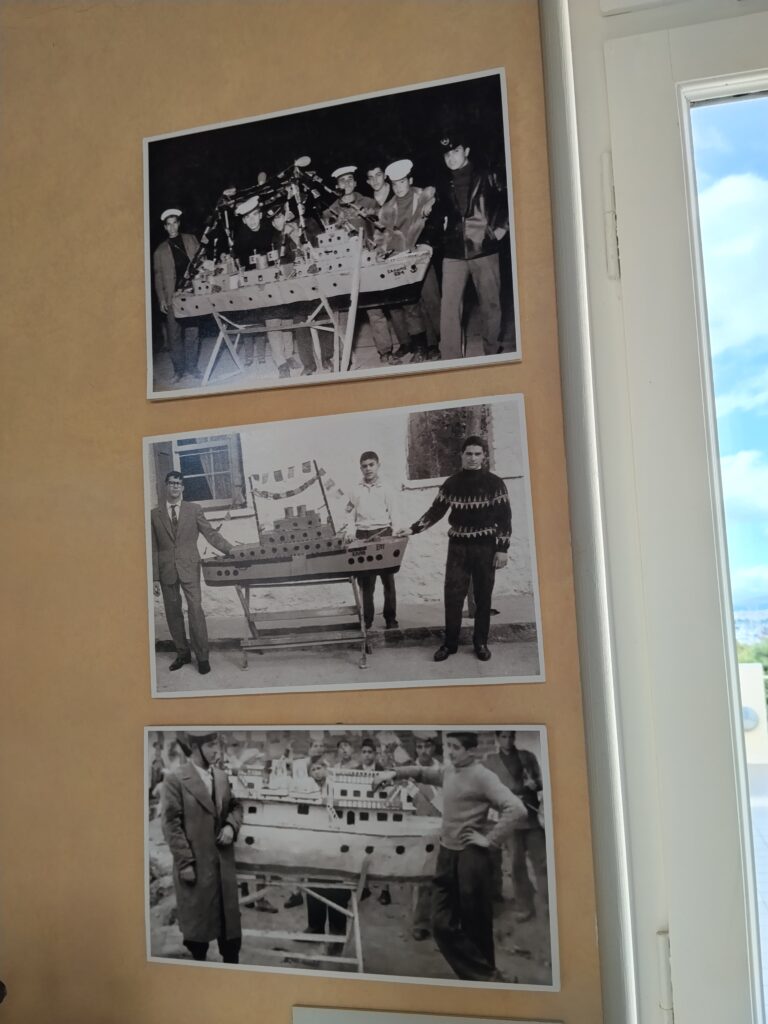
Three photographic snapshots featuring young boys from Chios island posing with their Christmas creation—a ship, usually two meters long, which they would carry around the neighborhoods dressed as sailors while singing carols. The decoration of these handmade ships included toy soldiers, garlands, and mandarins from the Kampos of Chios, which they painted gold and hung like lanterns.
The “Resistance Puppet Theater”
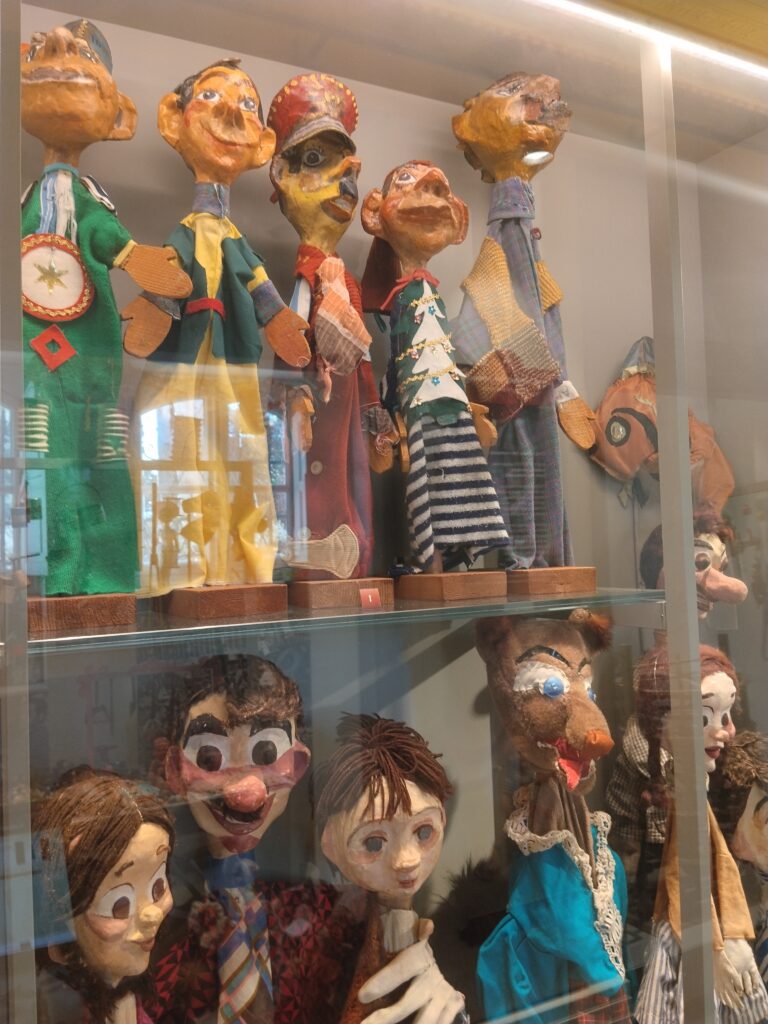
Its central characters included Barba-Giorgos, Garidas, Missilinis, Hittlerides, and other puppets made from paper, newspapers, and flour paste. Its creator was Nikos Akiloglou (also known as Akylas or “comrade Puppeteer”), who initially toured the neighborhoods of Athens and later the mountains of “Free Greece.” After the war ended, Akiloglou continued giving performances in Athens, removing the puppets of Missilinis and Hittlerides.
Hexagon
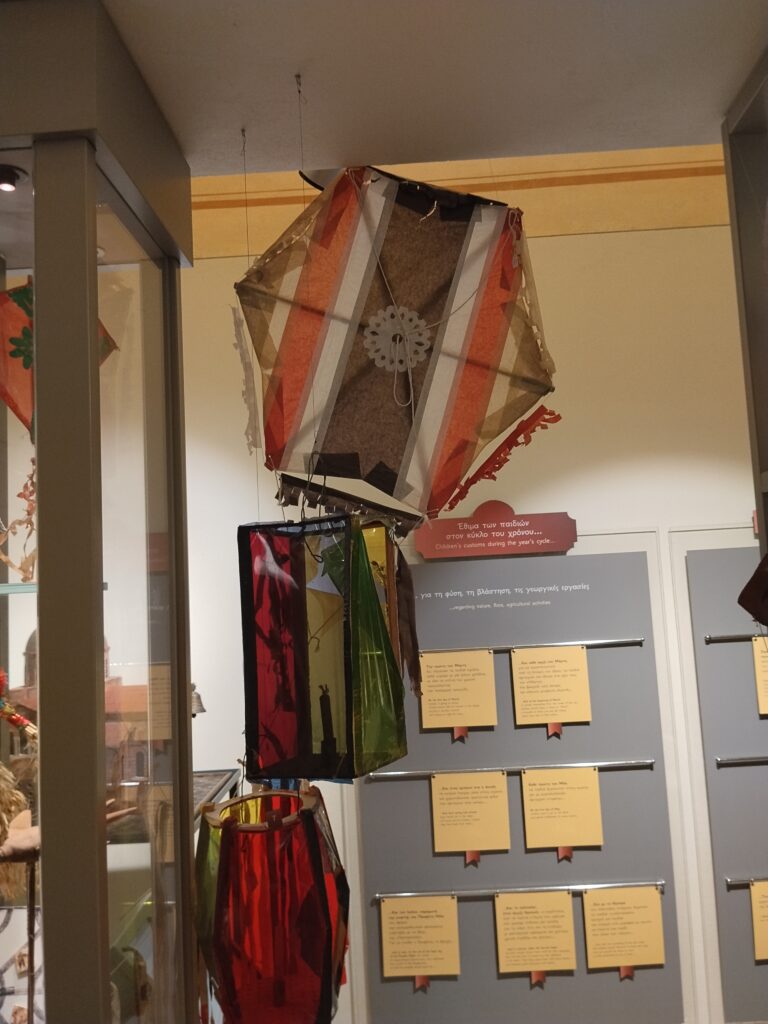
A sample of the museum’s rich collection of traditional paper kites.
Paper Theater
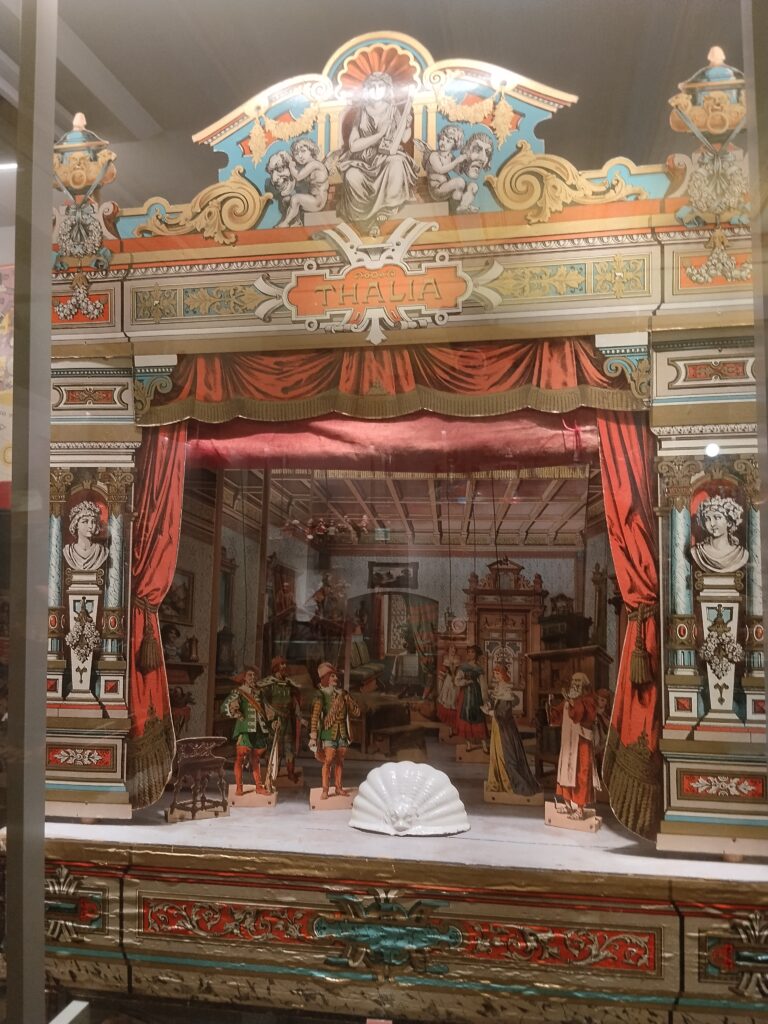
Or otherwise “Papiertheater.” The miniature theater that flourished in 19th-century Europe, especially among members of the bourgeoisie who loved opera and could stage a performance in their living room, playing music and moving the figures with rods. It lost its prestige when radio and cinema entered Europeans’ lives. The above Papiertheater was manufactured around 1890 by the Schmidt & Romer publishing house and was accompanied by the text, scenery, and actor-figures of the theatrical play Der Freischütz (“The Freischütz”).
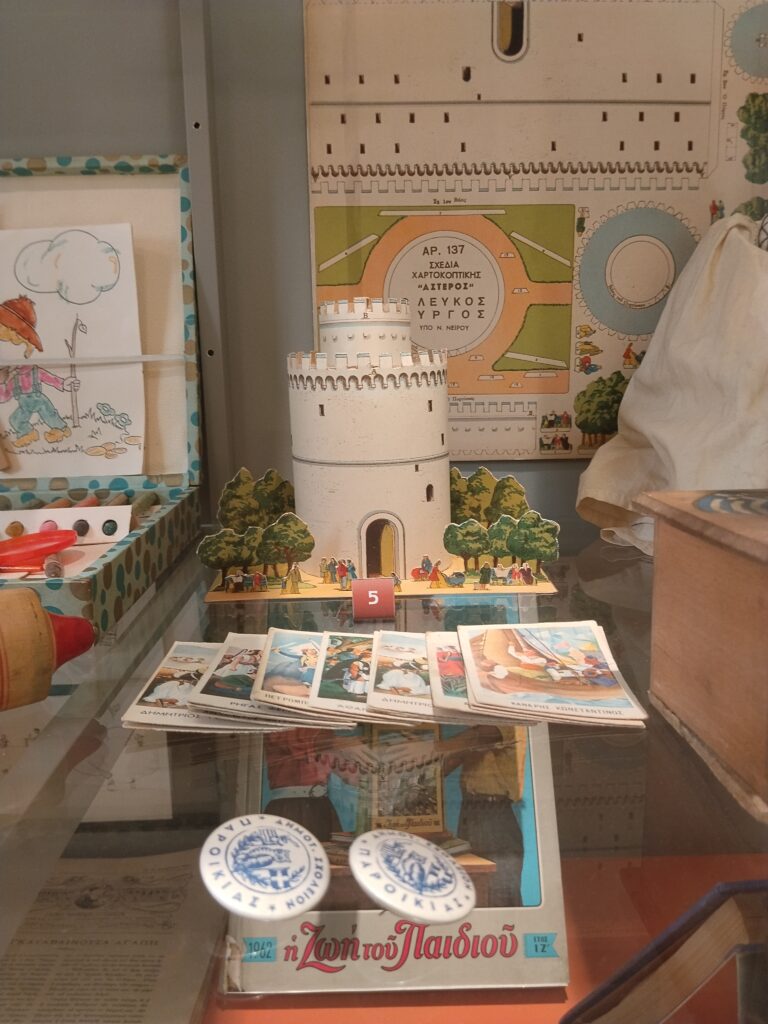
Paper Thessaloniki
“The White Tower,” a paper model-making project from 1950. Created by N. Neiros on behalf of the “Astir” publishing house.
Japanese Carp
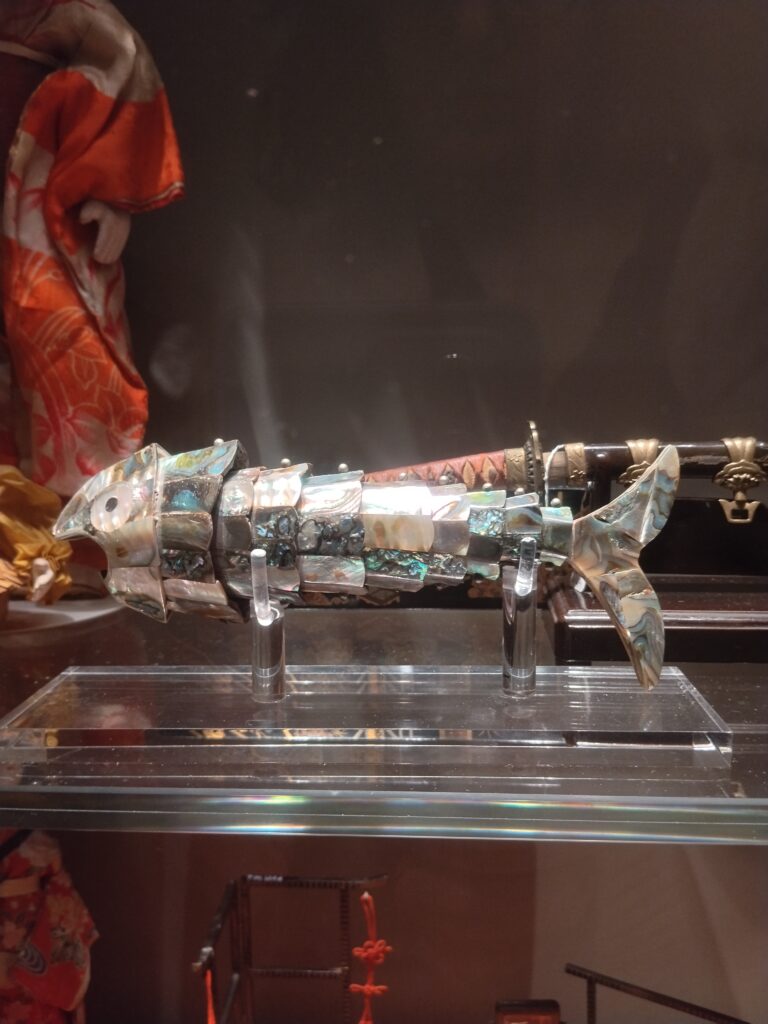
The museum’s collection includes toys from Asia that express the elaborate aesthetics and culture of the Far East. The depicted carp originates from 19th-century Japan and the “Boys’ Festival,” celebrated on May 5th (which has now transformed into “Children’s Day”). The symbolism relates to the strength and courage of the carp, a fish considered capable of swimming against the river’s current.
Steam-Powered Factory
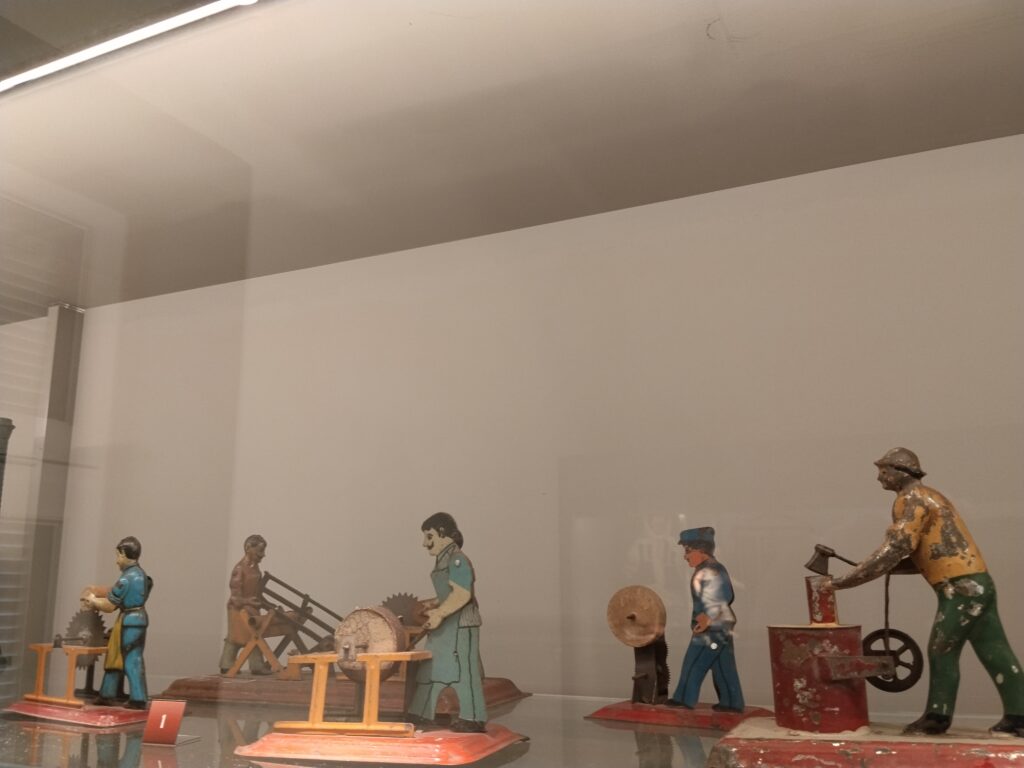
A steam-powered factory with artisan workers, released onto the market around 1920 by the German toy manufacturing company Gebr. Märklin & Cie. Considering the era—with Germany defeated and deeply in debt after World War I—the toy looks more like a propaganda tool. Perhaps it was meant to boost the morale of the average German family through images of labor and prosperity, or to convince citizens that they needed to work harder.
View of Flisvos
From the balcony on the first floor of the Kouloura mansion.

Leave a Reply