A story from the era of the great digital wake-up call.
In 2025, I did something I never expected: I took a digital marketing course. Born in 1983, I belong to the first wave of Millennials — the generation that remembers grubby supermini rides and those cream-colored rotary phones at home.
All of us began to grasp the scale of the digital revolution when we were at a transitional age, around 18 to 20 — young, but not children. In a way, our generation is considered privileged, because we have fully lived experience of both eras. Our school years were analogue; our adult lives have been digital.
Over time, the great digital revolution began to feel more like a great digital wake-up call — one that operates through exclusion and a kind of illiteracy imposed on those unable to keep up with the pace of change. To avoid that wake-up call, and to push myself beyond my comfort zone — since keeping up with technological developments had never particularly excited me — I decided to take a digital marketing course through the e-learning programmes of the National and Kapodistrian University of Athens.
I had assumed that both components of the course — “digital” and “marketing” — were foreign to me. After three months of classes, both online and in person, I discovered that marketing was far more familiar than I had imagined. I also realised that it is a far more substantial and refined craft than the one I had in mind: not merely about persuasion and sales, but about understanding what people want and finding ways to attract customers through stories — whether disposable or enduring. I found myself drawn to marketing because it brings together elements of the fine arts, creative writing, sociology and statistics. Because its campaigns can be predictable and formulaic, or imaginative and subversive — depending on the marketer, but above all on the client.
When it comes to targeting and finding an audience, digital platforms play an enormous role. In fact, with Google’s tools, you can identify the exact customer looking for precisely what you’re selling. If you sell fishing gear, and somewhere there is an elderly gentleman living in a village by the Erymanthos River, passionate about fishing but struggling with tendonitis in his hands, Google can find him — and show him the ad you created for a soft bamboo fishing rod designed specifically for older users. The possibilities the digital world offers for connecting the right customer with the right product are unprecedented, and that alone makes it a fascinating phenomenon to observe.
The course concluded with a series of assignments such as the one below, in which we were asked to create an advertising campaign for a new fast-food company in central Athens, along with its hero hamburger. Through the exercise, we had to achieve specific objectives within a defined timeframe, using different types of campaigns and working with a modest budget (€3,000).
For the creative side of the campaign, I drew inspiration from an eclectic mix of references: 1950s American diners, the burger joints that dominated Greece’s fast-food scene in the early 2000s, and the history and mythology of Athens.
The full assignment follows below:
Campaign 1: Driving sales for the new hamburger.
Budget: €1,500.
Objective → Purchases
Why: One of the most effective ways to increase sales, especially through Google Ads’ Performance Max campaign type.
Headlines →
– New! Athens Olive Burger in Syntagma
– The new Athens Olive Burger is here for you
– New Burgers, Square Taste
– The juiciest new bite in town
– Try the juicy Athens Olive Burger!
– A burger with the taste of Athens
– The burger everyone’s been waiting for
Long headlines →
– Experience the juiciest burger in Syntagma
– A new burger made with fresh ingredients, in the heart of Athens
– A delicious escape with burgers that truly satisfy
Descriptions →
– The most indulgent burger experience in the square.
– Fast service, unforgettable flavour, competitive prices.
– Fresh ingredients – juicy burgers – unique flavour.
Business name →
Syntagma Burger Spot
Campaign setup →
I use the Google Ads platform to upload images, logo assets and video content that support the campaign and make it more appealing to my target audience.
I promote the new burger (Athens Olive Burger), which replaces pickles with olives — a symbolic nod to Athens.
Target cost per action (CPA) setup →
– 50% of the total budget → €1,500 (€500/month)
– Weekly spend → €125
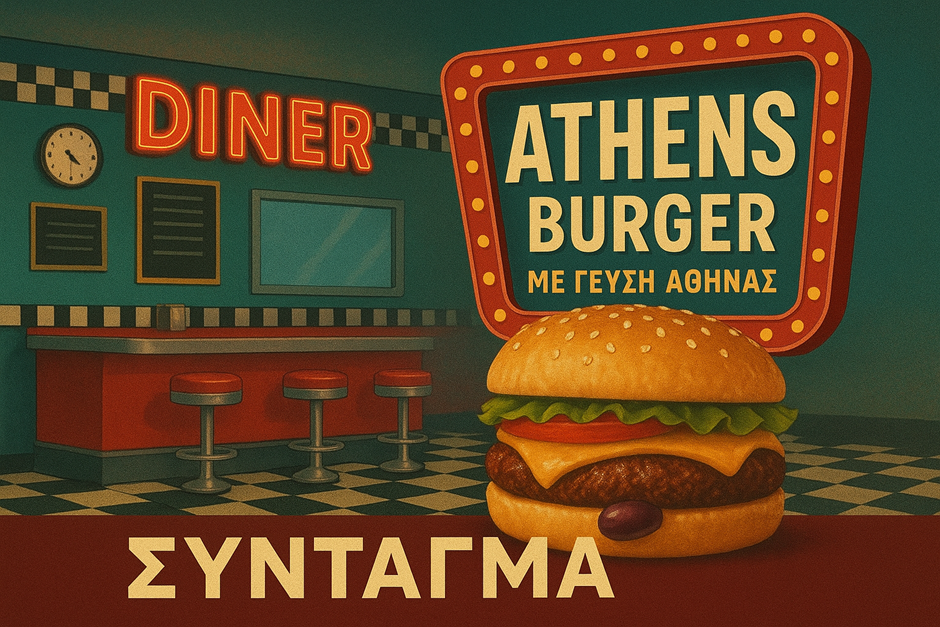
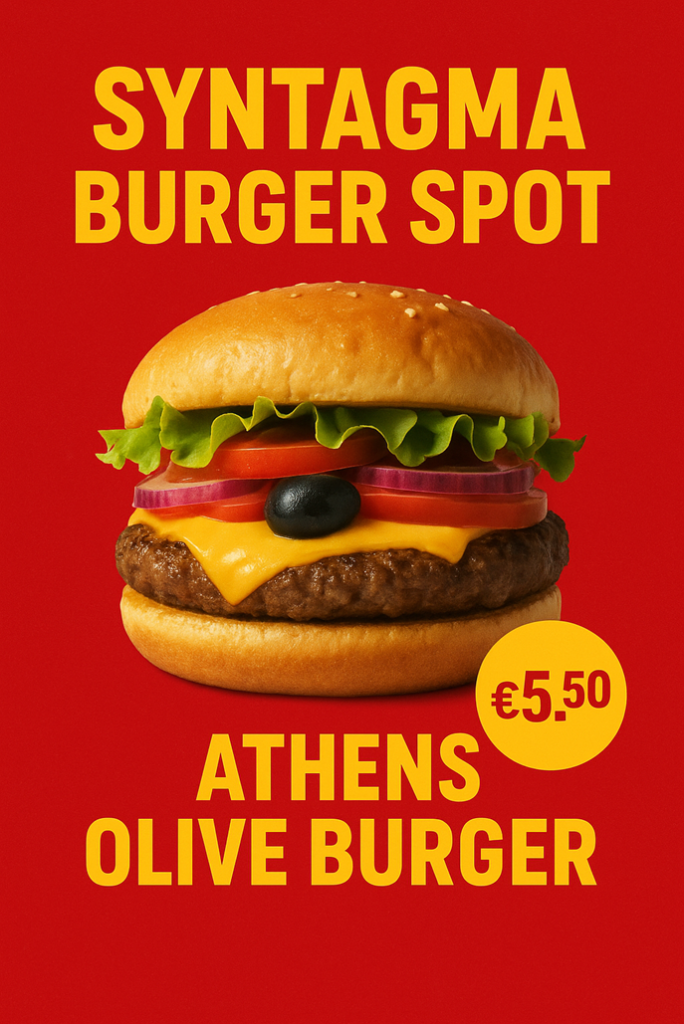
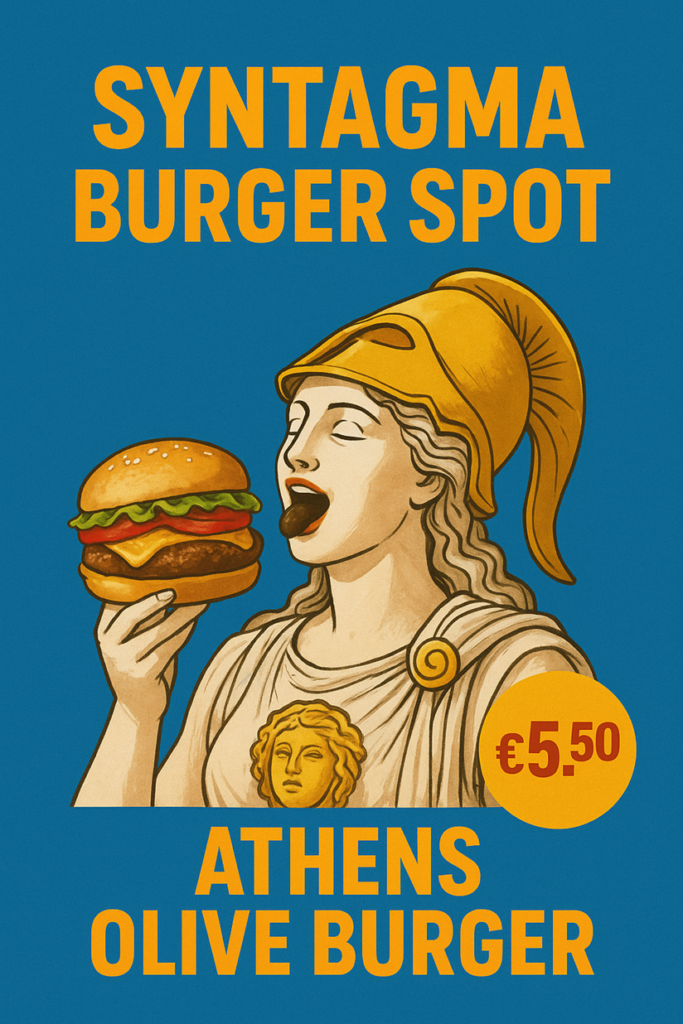
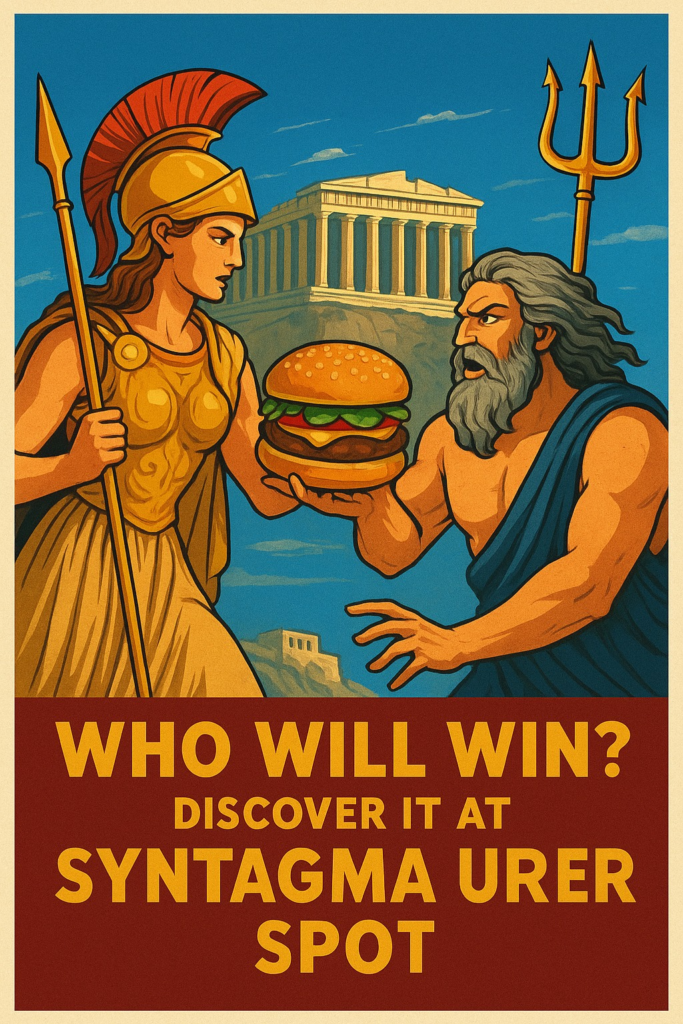
I create four mock-up concepts, each with a different visual style, to test which performs best (the mock-ups were created with ChatGPT).
Campaign 2: Budget: €750.
Objective: Prospective customers → Get directions. I enter the URL that users are directed to after requesting directions.
Example URL:
https://www.google.com/maps/place/Syntagma+Burger+Spot/@37.9752,23.7347 (coordinates indicative only)
Headlines →
– New! Athens Olive Burger in Syntagma
– The new Athens Olive Burger is here for you
– New Burgers, Square Taste
– The juiciest new bite in town
– Try the juicy Athens Olive Burger!
– A burger with the taste of Athens
– The burger everyone’s been waiting for
Campaign type →
Video campaign, in order to reach viewers on YouTube and drive conversions.
Campaign format →
Demand Gen campaign (generate demand), using AI-powered tools to create visually engaging ads.
Campaign objective →
Conversions
I am given two options: Conversions and Clicks.
I choose Conversions, because my goal is measurable outcomes — in this case, users requesting directions. Clicks may generate high traffic without delivering meaningful value.
Target cost per action →
CPA (Cost per Action): €3–5 per directions request
Custom colours →
Primary colour: Red
Accent colour: Yellow
Both are colours traditionally associated with burger-house branding.
EU advertising policies →
No
Location targeting →
Advanced search → Radius → 5 km from Syntagma Square
I target consumers across different parts of Athens, given that the restaurant is located in the city centre — a high-traffic area that naturally attracts a broad audience.
At the same time, I exclude areas with strong, well-established dining scenes in the southern, western and northern suburbs (such as Kifisia, with its many burger restaurants, as well as Peristeri, Voula, etc.). For that reason, I choose a moderate 5 km targeting radius.
Languages →
Greek and English
This allows me to take advantage both of the restaurant’s central location and of burger culture’s international appeal — particularly among foreign visitors, including American travellers visiting Athens.
Devices →
Mobile phones
Users typically search for directions through Google Maps on their phones, making mobile the most relevant device for this campaign.
Ad schedule →
Friday, Saturday, Sunday | 19:00–22:00
Because the campaign budget is relatively limited, I opt for precise targeting — focusing on the days and hours most likely to convert into actual customers.
Campaign rationale →
In this campaign, I combine local promotion of Syntagma Burger Spot in the Syntagma area with the launch of the new promotional video campaign.
Campaign 3: Budget: €750.
Campaign type: App campaign → Android (To avoid splitting the budget across two separate campaigns for iOS and Android users, I choose to target Android only, as it remains the more widely used mobile platform among Greek audiences).
URL:
https://play.google.com/store/apps/details?id=com.example.app
App installs →
The objective is to encourage new users to install the app.
Location targeting →
Advanced search → Radius → 10 km from Syntagma Square
I expand the radius slightly, as the goal here includes brand awareness, not just immediate customer acquisition while the campaign is running.
Languages →
Greek, English
EU advertising policies →
No
Daily budget →
€8.30
Campaign focus →
In-app actions
The objective is not simply to drive app installs, but to encourage users to place an order through the app.
Projected results →
Estimated app installs: approximately 830 per month
Assuming a 10% conversion rate, this would result in approximately 83 first orders.
Leave a Reply