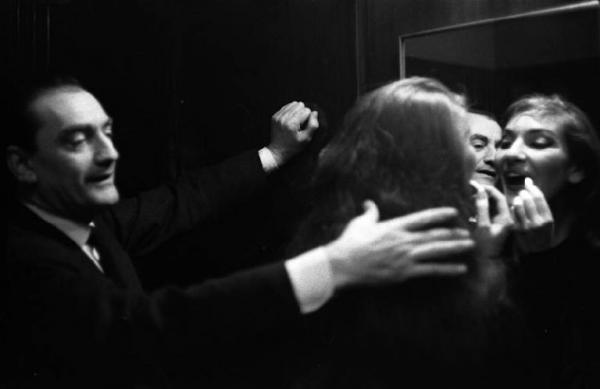
Maria with Italian filmaker, Luchino Visconti. Italy, 1957.
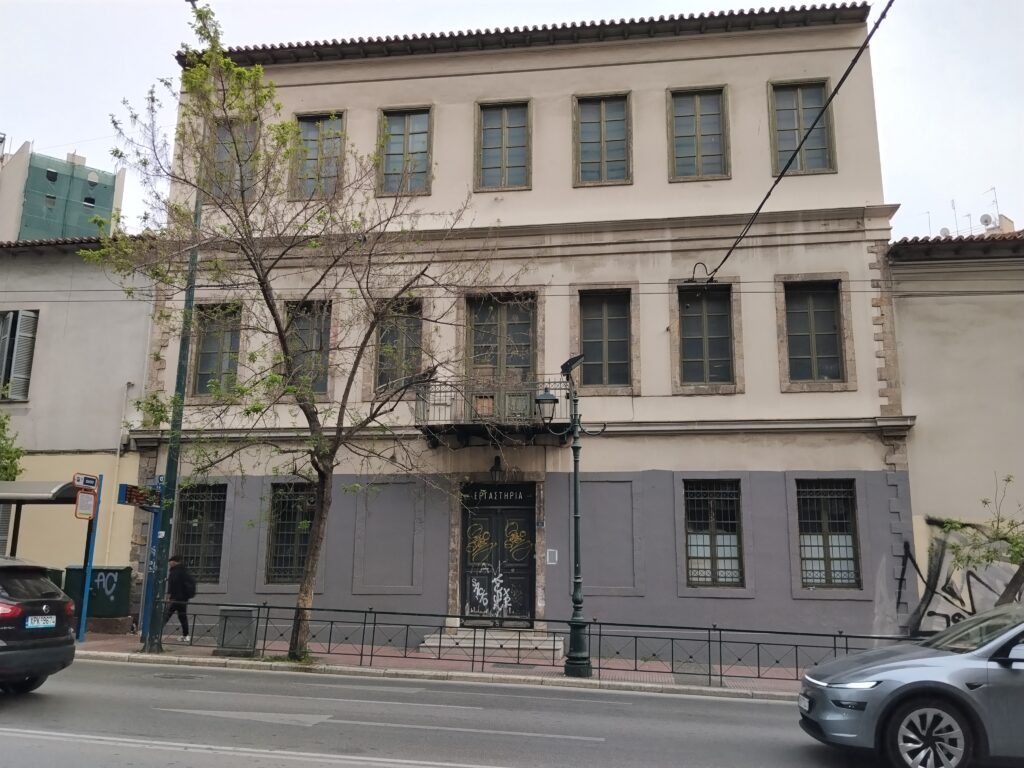
The building of the Athens Conservatoire (35 Piraeus Street) where Maria studied between 1939 and 1943. Today, the institution is housed in a building on Rigillis Street, while the original location is commemorated only by the name of the bus stop.
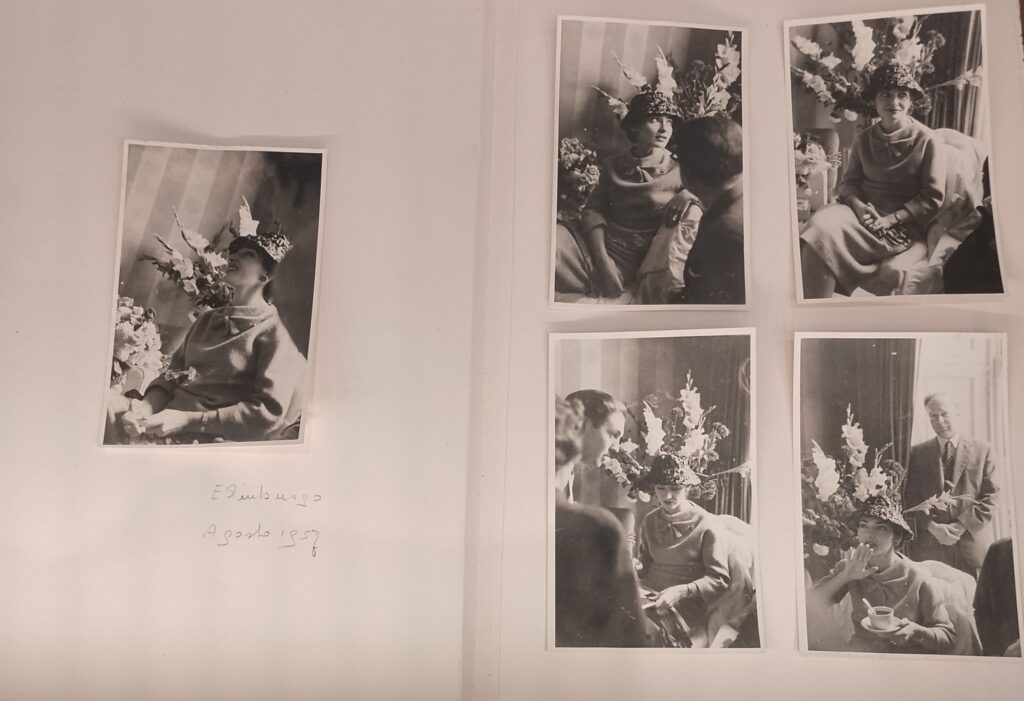
Personal album of the diva featuring 167 photographs from the period 1947–1959. From the Maria Callas Museum.
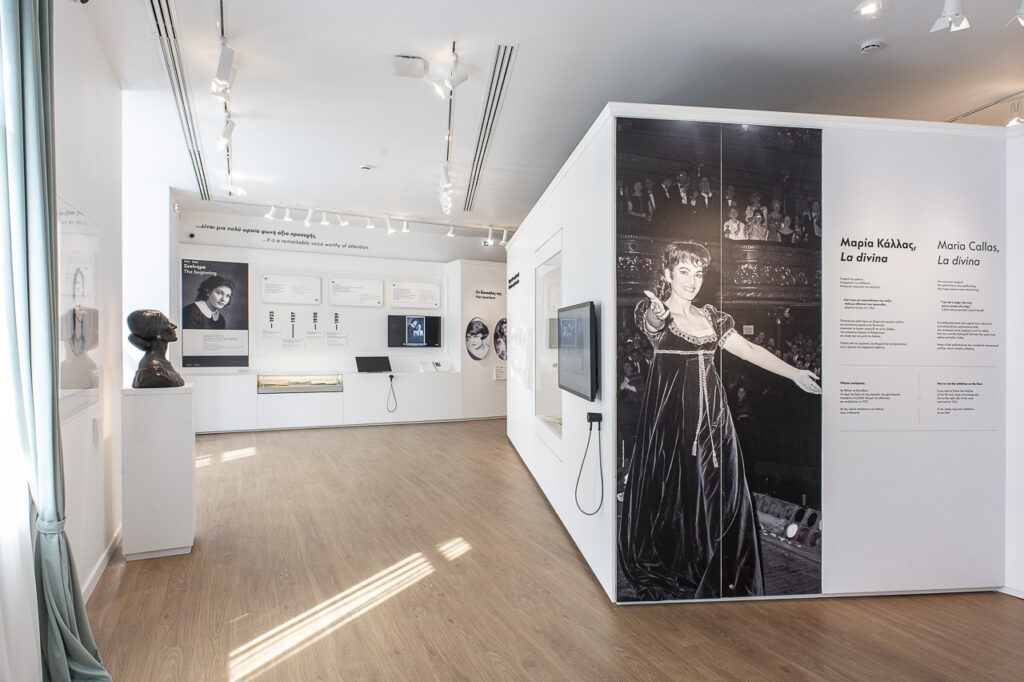
The Maria Callas Museum opened its doors in 2023, marking the 100th anniversary of the diva’s birth.
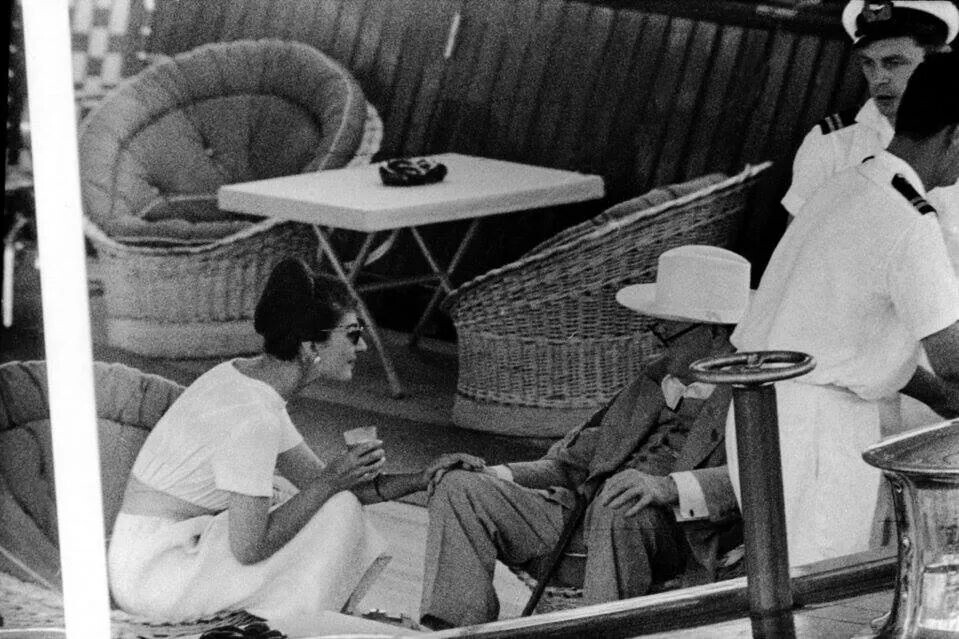
Maria with Winston Churchill, 1959.
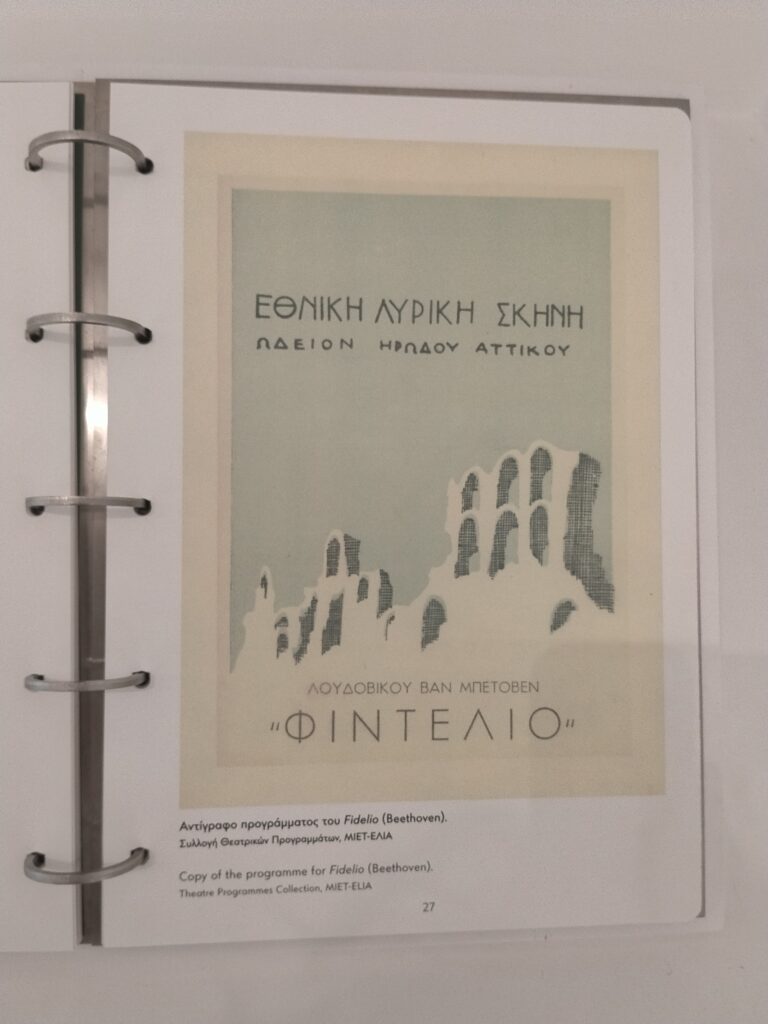
The program of the Greek National Opera for Beethoven’s Fidelio, presented at the Odeon of Herodes Atticus, with Maria in the role of Leonore. From the Maria Callas Museum.
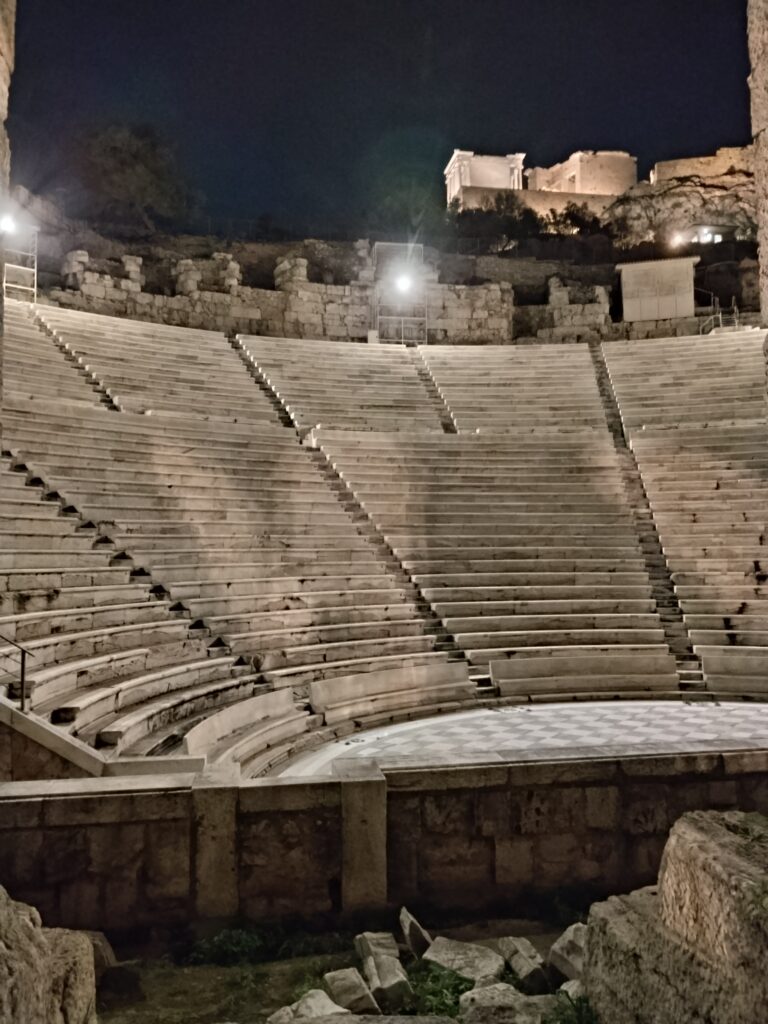
The Odeon of Herodes Atticus, 2026. It has been sixty-nine years since Maria’s last performace here.
Maria Callas lived in Athens from 1937 to 1945—eight pivotal years that shaped her character under the harsh conditions of World War II. During this time, she trained at the Athens Conservatoire and the Greek National Opera while residing in a beautiful house that still stands today.
In 2023, the world celebrated the centenary of her birth, and a year later, a wave of documentaries and films followed, including Mary, Marianna, Maria by Michalis Asthenides and Vassilis Louras, and Maria by Pablo Larraín. Public interest in her legacy remains high, making this the perfect time to retrace the diva’s footsteps in Athens with an 8-stop travel guide through the city that shaped her artistic identity.
Maria’s house
Maria Callas moved from the U.S. to Greece in 1937 with her mother, Litsa, and her sister, Jackie. After relocating several times within Athens, they settled on the fifth floor of the Papaleonardou apartment building at the corner of Patission 61 and Skaramanga streets in central Athens. Built in 1925 during the interwar period, the building was designed by Greek architect Kostas Kitsikis (1892–1969), who studied in Berlin and was influenced by Central European architectural trends. Maria and her family lived there during World War II while the budding diva trained to become one of the greatest opera singers of all time. Today, after several years of abandonment and following its evacuation after operating as a squat (Villa Skaramanga), Kitsikis’s grand edifice—with its worn yet striking beauty—is beginning a new life as the Academy of Lyric Art.
Athens Conservatoire
The Athens Conservatory, founded in 1871, is the oldest and most prestigious institution for lyrical arts in Greece. It has nurtured many musical pioneers, including composers Dimitris Mitropoulos (1896–1960) and Mikis Theodorakis (1925–2021). Maria Callas studied here during the most challenging years of her youth, from 1939 to 1943. Amid war, poverty, and hunger, the young soprano honed her vocal skills under the guidance of Spanish soprano, Elvira de Hidalgo. Their student-teacher relationship was pivotal to Maria’s development, as de Hidalgo mentored and supported her with unwavering dedication. At the time, the Athens Conservatory was located at 35 Piraeus Street, in one of the city’s oldest buildings, constructed between 1834 and 1845. Today, the conservatory is housed in a complex on Rigillis Street, adjacent to the archaeological site of Aristotle’s Lyceum.
Olympia Municipal Music Theatre “Maria Callas”
The establishment of the Greek National Opera and the career of Maria Callas share a common starting point. In 1939, shortly before the Greco-Italian War, the visionary Kostis Bastias—a prominent figure in literature and the arts—founded the Greek Opera House as part of the National (then Royal) Theater of Greece. On June 20, 1940, Maria—who at the time used the name Mary or Marianna Kalogeropoulou—signed her first contract with the Opera House. She was officially hired as a chorister with a monthly salary of 1,500 drachmas. However, she had a personal arrangement with Bastias that allowed her to forgo choir duties and focus entirely on her musical studies. For decades, the National Opera was housed in the Olympia Theatre at 59 Akadimias Street in downtown Athens. In 2017, it moved to state-of-the-art facilities at the Stavros Niarchos Foundation Cultural Center (SNFCC), located on the site of Athens’ former racecourse. Meanwhile, the historic building on Akadimias Street was transformed into the Olympia City Music Theatre “Maria Callas.”
Pallas Theatre
In the heart of the Greek capital, just a few dozen meters from the Parliament, stands City Link—formerly known as the Army Pension Fund building during Callas’s time. Occupying an entire city block between Panepistimiou, Amerikis, Stadiou, and Voukourestiou streets, the building houses the Pallas Theatre, the only Athenian theater of the era equipped with a bomb shelter. As a result, during wartime, performances by the National Theater and the Opera House were held there. At around 17 years old, Maria made her debut on the Pallas stage as an understudy in Boccaccio, the three-act operetta by Franz von Suppé. It was the only time in her career that she performed in Boccaccio.
Rex
The Rex is a landmark of Athens’ cultural scene—a multi-hall complex in the city center that opened in 1937. During the interwar period, it was a state-of-the-art venue modeled after American standards, featuring both cinema and theater. On August 3, 1945, in a packed hall at the Rex, 22-year-old Maria Callas gave her farewell concert in Athens to great acclaim. Soon after, she left for abroad, where she transformed into the legendary opera diva we know today.
Odeon of Herodes Atticus
The Odeon of Herodes Atticus, more widely known as “Herodion,” is located on the southern slope of the Acropolis and was built in the 2nd century A.D., sponsored by the Athenian orator and sophist, Herodes Atticus. It is considered the most treasured jewel of Roman Athens. Maria Callas’s performances at Herodion were unforgettable. In 1944, she portrayed Leonora in Beethoven’s Fidelio—the first-ever presentation of the opera in Greece. Then, in 1957, she delivered a sensational performance that left the Athenian audience in awe, singing arias from Wagner’s Tristan und Isolde, Verdi’s La forza del destino and Il trovatore, Donizetti’s Lucia di Lammermoor, and Ambroise Thomas’ Hamlet.
Hotel Grande Bretagne
After rising to international fame and establishing herself as a great opera diva, Maria Callas stayed at the Hotel Grande Bretagne during her visits to Athens. To this day, it remains the most impressive and luxurious hotel in the Greek capital, located in the heart of the city on Syntagma Square. A photograph from that era captures Callas rehearsing in her suite at the Grande Bretagne with Italian operatic conductor and vocal coach Antonino Votto, preparing for her 1957 performance at the Herodion.
Maria Callas Museum
A modern cultural space that celebrates the timeless bond between Callas and Athens is the Maria Callas Museum, located at 44 Mitropoleos Street in the heart of the city. Opened in late 2023, the museum houses a collection of over 1,000 items that belonged to or relate to Maria Callas. These include her personal photo album (spanning 1947–1959), letters to and from Callas, performance posters and programs, telegrams, personal belongings, records and CDs, books, magazines, paintings, as well as clothing and costumes from her stage performances. A museum dedicated to the most passionate opera singer of all time—La Divina.
Leave a Reply